Archive
The author’s archive as a space of thought — a place where a private legacy is narrated, preserved, and transformed into a shared public heritage.
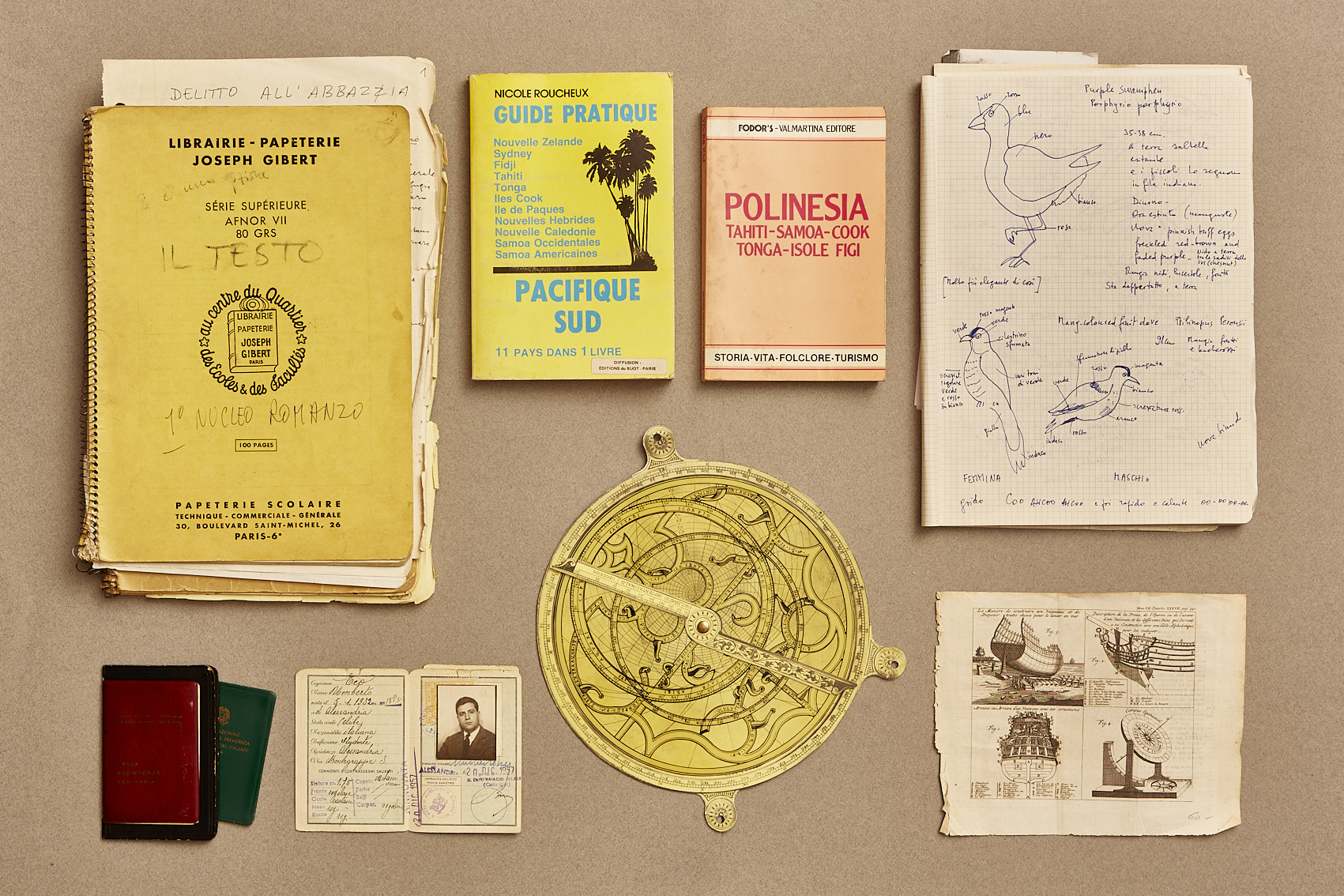
An author’s archive is not merely a collection of documents preserved in order, nor simply a tool for cataloguing. It is something alive — a structure that determines how information can be accessed. Its organizational logic reflects the author’s intentions, thought, and working method, shaping the interpretation of the work and the ever-evolving relationship between what has been published and what remains private. Umberto Eco’s archive moves precisely along this axis between the public and the personal. Currently under review by a team of specialists coordinated by the Foundation, the paper archive — comprising more than 250,000 sheets — remains in its original location in Milan, pending its future transfer to the University of Bologna. It includes early and mature writings, drawings, comics, notes, essays, annotations, drafts of novels, and correspondence. The verification process preserves the topographic memory of the materials: a progressive numbering system identifies the archival units (“folders,” “files,” “bundles”) according to their physical position. The analysis unfolds in successive phases of examination to accurately identify the presence of sensitive materials and private documents, which are recorded according to degrees of relevance. Alongside Eco’s personal papers, approximately 80 folders of press clippings have been found and preserved in their original arrangement. These reflect the author’s intention to create, through the selection of articles published over the years, a curated record of the reception of his work. These materials — along with multimedia documents — are currently being reviewed and catalogued. The Foundation preserves this archive respecting the times, methods, and spaces of Eco’s creative process, aware of the central role an archive plays in transforming private testimony into public knowledge, and respecting the rights of the copyright holders and of those mentioned in the papers.