Who We Are
The Fondazione Umberto Eco seeks to serve as a reference point for the preservation, promotion, and enhancement of Umberto Eco’s intellectual legacy. At the same time, it aims to open a broader reflection on the role of the humanities — and of knowledge more generally — in the digital age.
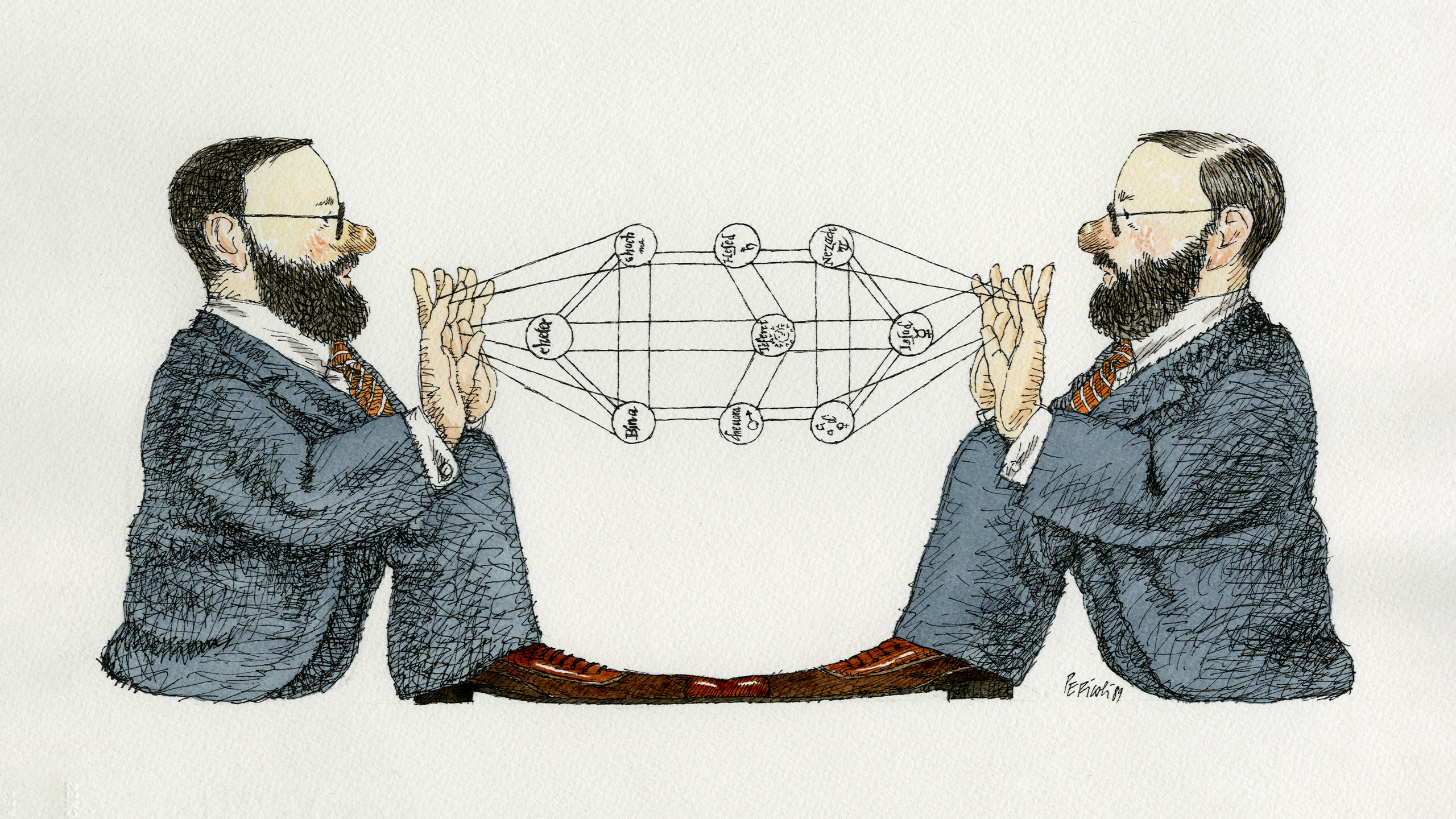
Watercolour © Tullio Pericoli
Mission

Photo © Andrea Frazzetta
One of the defining features of Umberto Eco’s intellectual activity was his lifelong study of how culture is collected, organized, and made accessible. Beyond his essays, novels, and teaching, this is evident in his enduring fascination with encyclopedias, libraries, and his passion for the orders and lists through which knowledge takes shape.
Today, technological evolution directly affects access to knowledge, making the idea of a universal library that gathers everything seem almost within reach. Yet Eco warned us of the danger of mistaking such a library for a mere accumulation of data, in the form of documents and information. He also urged vigilance against the risks of manipulating works and distorting the intentions of their authors.
The Fondazione Umberto Eco aspires to serve as a cultural stronghold for the evolution of the humanities in dialogue with technological development.
The Foundation is guided by a board of scholars and experts from leading universities and international research centers. It aims to become a plural and open meeting ground for all those who, today and in the future, draw inspiration not only from Umberto Eco’s memory but also from the wide-ranging diversity of his interests.
 > statute
> statute
> statute
Legacy

Photo © Leonardo Cendamo
Umberto Eco passed away in 2016, leaving his books and papers to his heirs — along with the freedom to decide their future. From the outset, the family’s intention was that his library should be made available to the public. In 2018, the Italian State formally recognized this heritage as being of “particularly important historical interest.”
Following this designation, and after a series of discussions with the Italian Ministry of Culture, the heirs decided to donate both Umberto Eco’s working library of 44,000 volumes and his personal papers to the Italian State, on the condition that they be granted on a free, 90-year loan to the University of Bologna, where they would be made accessible to the public. The volumes will be housed in a dedicated wing of the University Library of Bologna, scheduled to open in 2026, and will be arranged according to their original order and the author’s intended structure. The University Library has already received from the heirs the first 2,500 volumes — many of them containing annotations and dedications — which are currently being studied.
The collection of 1,260 ancient books, named by Eco himself the Bibliotheca semiologica, curiosa, magica, lunatica, et pneumatica, was sold to the Italian State and, since 2022, has been housed at the Biblioteca Nazionale Braidense in Milan, in a dedicated reading room adjacent to the one housing the manuscripts of Alessandro Manzoni. The collection is already accessible online through the National Library Service (SBN) and its OPAC catalogue.
Through two Steering Committees active within these institutions and through the Fondazione Umberto Eco, created by the family, the heirs continue to contribute to the preservation, study, and promotion of this extraordinary legacy — keeping alive the intellectual passions and spirit of Umberto Eco.